
Ostomy barrier rings, wafers, and stoma pastes are the most widely-used skin protection products on the ostomy care market. Delve into their differences, and learn how to best protect your peristomal skin.
Stoma Paste Vs. Barrier Rings: Comfort, Fit & Protection
There are between 725,000 and 1 million people with ostomies in the United States alone. And no two ostomy patients are exactly alike!
To meet their diverse needs, medical engineers have developed a range of options to prevent leaks, soothe irritation, and protect the ostomy site’s skin.
This guide explores how two particular types of stomal skin barriers—ostomy paste and barrier rings—work to protect skin. Use it to compare the functions, features, benefits, and drawbacks of each option. Then, choose the best ostomy barrier for your needs.
What Are Ostomy Barriers? Stoma Pastes & Rings, Defined
All ostomy barrier products protect peristomal skin (the skin next to your stoma) from the stoma’s output—and from any related fluids.
Stoma barrier rings and barrier paste products both create solid, impermeable shields at the stoma’s borders, blocking the substances within the ostomy from crossing the threshold and leaking onto the skin. Both work with an ostomy pouch or stoma cap to functionally separate an ostomy’s contents from the neighboring skin, containing it or directing it appropriately to the collection bag.
However, while pastes and rings serve the same protective purpose, they have distinct designs and use different materials to do so.
Ostomy Barrier Paste Is Protective Caulk
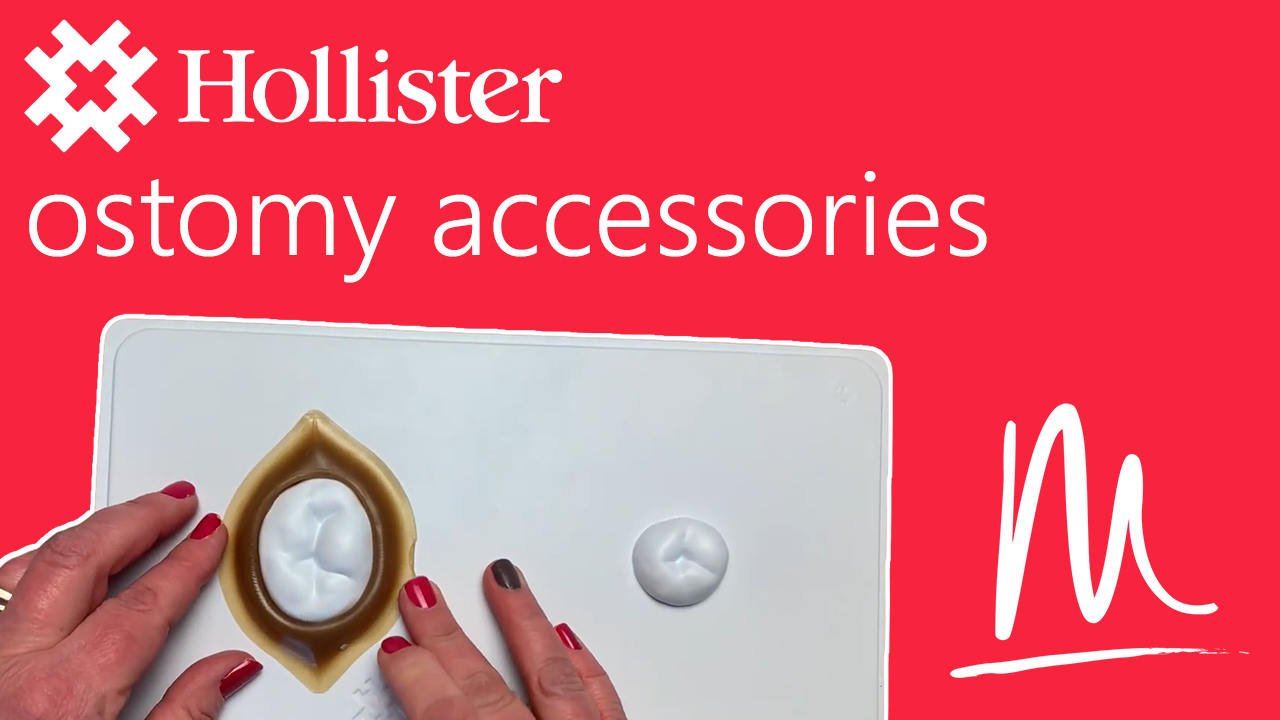
Stoma-safe skin barrier paste is a putty-like substance. Once applied, it creates a tacky barrier around the stoma.
A paste barrier fills the wrinkles and cracks in skin bordering the stoma, creating a smooth surface for seamlessly sealing the ostomy pouch’s plate to the skin.
It might help to think of an ostomy-shielding putty, like Adapt Skin Barrier Paste, as a protective caulk. It eliminates any gaps or cracks between the stoma, the peristomal skin, and the wafer.
How Stoma Skin Barrier Paste Works
Once applied, skin barrier paste dries, removing moisture that can create gaps. Certain barrier pastes dry hard like caulk, while others dry into a stiff clay-like material, depending on their formula.
Regardless of its final texture, the barrier paste creates a solid, waterproof shield, stopping even the smallest drops of stoma fluid from leaking out under the wafer.
Instead, the ostomy’s output flows where it should, and the peristomal skin stays healthy and safe.
Barrier Paste Vs. Ostomy Pouch Adhesive
It’s important to understand that ostomy barrier paste is not an adhesive. In fact, using too much paste can hamper the adhesive’s function.
Make sure to apply barrier paste in a way that works well with your preferred ostomy tapes and adhesives.
Barrier Rings Shield Skin From Stoma Leaks
Barrier rings are flexible circles or ovals that precisely encircle the border of a stoma.
Like barrier paste, rings can be used to fill in uneven skin contours at the stoma’s borders and nearby, smoothing out the skin’s surface to eliminate gaps between your skin and the ostomy wafer/plate.
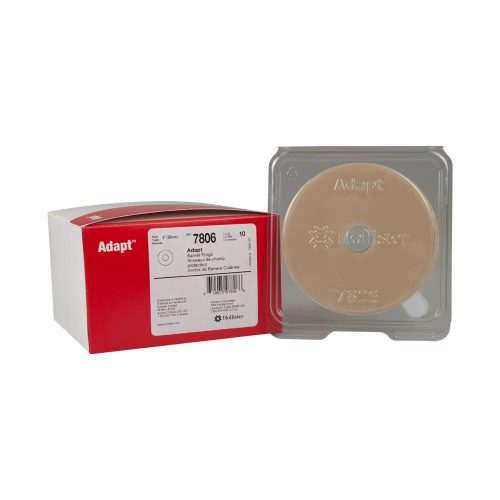
Shapable products, like Adapt Flat Barrier Rings, can be cut, layered, and otherwise manipulated to get an exact fit.
How Ostomy Barrier Rings Protect Peristomal Skin
Most barrier rings are made of a hydrocolloid polymer material, which becomes a gel when it contacts water. The automatic reaction of the hydrocolloid generates a barrier, preventing any fluid from the ostomy seep past the stoma’s borders.
Barrier rings come in different shapes, and they can be stretched and molded to a degree. However, they aren’t as malleable as barrier paste.
Alternate Barriers: Wipes, Sprays & Strips
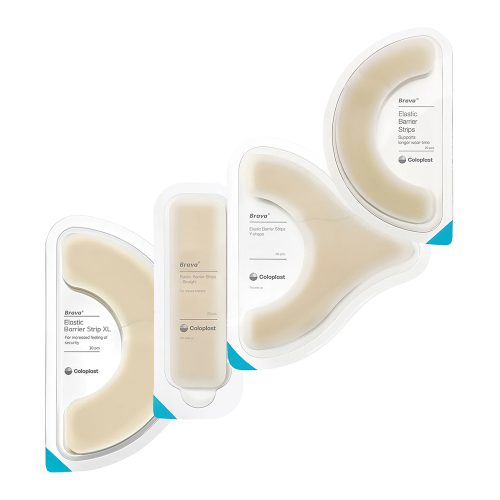
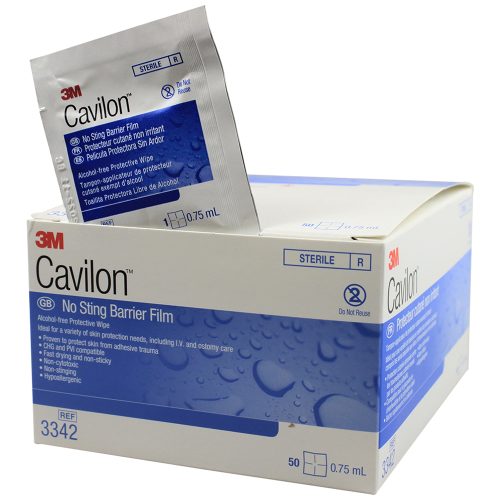
In addition to rings and pastes, people with ostomies can use protective wipes, sprays, and strips. Not all stoma barrier products are mutually compatible, so it’s important to check the label before using multiple products at once.
To learn more about alternatives, check out “To Prep or Not To Prep: Should I Use An Ostomy Skin Barrier Wipe/Spray?” That guide offers insight into a wider range of barrier products.
Key Features, Compared: Barrier Rings & Pastes
Rings and pastes both form barriers around stomas to protect skin. Here’s how each type of barrier’s features affect its function.
Ostomy Barrier Ring Materials, Traits & Options
There are a variety of ostomy barrier rings on the market. When determining which ring is right for you, you’ll want to consider its size, customizability, shape, and the materials the ring is made from.
Size
Ostomy barrier rings are sized by their outer diameter (OD). Typically, the inner diameter (ID) is listed within the product information.
For example, the sizes of Adapt Barrier Rings are listed as:
- 2″ (48-50 mm)
- 4″ (100-101)mm
- 2″ Slim (48-50 mm)
These are the flat rings’ ODs.
The product information for the Adapt line of flat barrier rings shows the 2” rings each have an inner diameter of ⅔ – ¾ of an inch (18 mm).
Most rings can be cut, stretched, or molded, so the ring’s ID fits securely around the stoma (at the border where the skin and ostomy meet) without gaps.
Once molded, a barrier ring’s inner circle should be no more than 1/8th of an inch (3-4 millimeters) the diameter of your stoma’s base. The closer it fits—without rubbing against or constricting your stoma—the more effective it is as a barrier.
Stretch is often included in size descriptions. For example, the Adapt CeraRing Convex Barrier Rings come in three sizes, each with a listed ID range:
- ⅘” (20 mm) – can be stretched to 1″ (25 mm)
- 1 ⅕” (30 mm) – can be stretched to 1 ⅜ “ (35 mm)
- 1 ⁹⁄₁₆ (40 mm) – can be stretched to 1 ¾” (45 mm)
The OD should extend beyond your stoma (covering your peristomal skin) by a radius of at least ¼ of an inch or so, and up to 2 inches if you prefer more coverage.
Barrier rings also vary in thickness. Thinner rings offer a lower profile, while thicker rings offer a bit of extra cushion.
Customization Options (Pre-Cut Vs. Cut-To-Fit)
Pre-cut barrier rings come with interior holes approximately the size of the stoma. The pre-existing hole might be moldable, but it’s typically not meant to be further cut.
In contrast, cut-to-fit barriers have either no hole, or a very small central opening. They’re meant to be cut by the wearer before application.
Pre-cut barriers are a bit easier to use, as the hole is already there. Cut-to-fit barriers can be more exactly shaped.
The New Image Flat Flextend Skin Barriers are available as a Pre-Sized Version and a Cut-To-Fit Version.
Shape: Flat Vs. Convex Vs. Oval Convex
Flat barriers are standard. They’re used when the stoma protrudes ¼ of an inch (or more) from the skin’s surface naturally. This protrusion makes it easier to direct output without it accidentally leaking onto the skin.
The Adapt Flat Barrier Rings use this standard shape. They can mold to skin that’s a bit uneven.
But, they’re not the best choice if a stoma doesn’t protrude enough, or if the skin around the stoma has folds or uneven contours. In those cases, a convex barrier ring is better.
Convex barriers provide gentle outward pressure to support the stoma’s position. The curve helps flatten and even out skin nearest to the stoma, and the pressure distribution can help the stoma move into the right position comfortably.
Convex barriers like Adapt Convex Barrier Rings may be soft or firm, and their slope angle varies. It’s important to work with your doctor to choose the right option for your condition.
When a stoma is elongated, or its border is irregular, it’s worth trying a uniquely shaped barrier, like Adapt Oval Convex Barrier Rings.
Materials: Alcohol-Free Polymers & Ceramides
Ostomy barrier rings are hygienic. But they don’t have antiseptic or antimicrobial properties as alcohol-based pastes do. Instead, they’re typically made from skin-friendly polymers and silicones.
Some, like the CeraRing Flat Barrier Rings—and their convex variants—incorporate ceramides, to further protect skin and improve its health.
Ceramides are natural, fatty lipids in the skin that form the stratum corneum: the protective, outermost layer of skin. Adding ceramides to skin protection products helps keep skin healthy, and it reduces irritation while the protectant serves its shielding role.
Studies show ceramide-infused ostomy skin barriers reduce transdermal water loss, a type of skin dehydration and irritation that increases risk of injury and infection.
Skin Barrier Paste Attributes, Ingredients & Varieties
Skin barrier pastes likewise vary. When choosing a barrier paste for your ostomy, look for a product with ingredients and an applicator that works for your needs.
Ingredients: Polymers, Cleansers & Moisture-Absorbers
Most skin barrier pastes are composed of ingredients in three categories:
- Non-irritating, non-adhesive structural substances, like compound polymers or silicone.
- These ingredients form films or gels over the skin
- The paste’s formula may combine them with thickeners or emulsifiers, to create an optimal texture
- Cleansing (antimicrobial) ingredients, like alcohols.
- These help fight pathogen growth on the protected skin
- Desiccant ingredients (moisture absorbers), like butanol normal or silica.
- These ingredients dry up sweat or moisture buildup, to prevent irritation and reduce the risk of infection and maceration of the skin
The paste’s ingredients work together. Certain pastes need time to “set” after they’re applied as filler in skin gaps.
When choosing a paste, look for one whose ingredients work well for you. For example, some drying ingredients are hydrocolloids, so they form a cooling gel when absorbing moisture—a helpful feature if your skin is prone to dryness or cracking.
Peristomal skin barrier pastes also often include soothing ingredients like aloe.
Make sure the paste is free from any allergens, like latex.
Skin Paste Strips Vs. Tubes
Skin barrier pastes usually come in tubes. The Adapt™ Skin Barrier Paste has a tapered nozzle to help control paste thickness as it’s dispersed. It’s designed to be easy-to-squeeze.
However, conditions can make tubes challenging to use, for some ostomy users. In that case, individually packaged paste ribbons, like Adapt Skin Barrier Strips, offer a format that may be easier to apply.
Pros & Cons, Compared: Barrier Rings Vs. Pastes
The table below directly compares ostomy barrier rings and stoma skin barrier pastes on seven key traits. Discover which type of barrier is more adaptable, comfortable, durable, affordable, and more.
Barrier Ring | Barrier Paste | Winner & Notes | |
Adaptability: Fit & Ease of Use | 🟢 Good adaptability. ✅ Barrier rings vary, but most can be molded and layered for a precise fit. 🚫 However, rings have less viscoelasticity than pastes. They can’t fill the smallest gaps and cracks. | ⭐Excellent adaptability. ✅ Paste can precisely fill folds and crack in peristomal skin to smooth its surface. ✅ Paste strips are easy to layer and mold for just-right fit. | Winner: Paste Note. Rings and pastes are both adaptable enough for most ostomy patients. But, the putty-like viscoelasticity of barrier paste makes it slightly more adaptable. |
| Strong / Durable | ⭐ Excellent durability. ✅ Resists corrosion from colostomy output for an extended time. ✅ Resistance against liquid urine & small intestinal fluid output is good (flat rings) or excellent (convex rings) | 🟢 Good durability. ✅ Resists corrosion from standard colostomy output. ✅ Hydrocolloid can absorb excess fluid 🚫 Limited resistance against liquid urine or small intestinal fluid output | Winner: Ring Note. Thick barrier rings perform better than slim rings when a stoma has liquid or mushy output |
| Comfortable | 🟢 Good comfort level. ✅ Rings’ sting-free materials are less likely to irritate skin than alcohol-based pastes. ✅ Convex rings can alleviate painful stoma pressure. ✅ Ceramide-infused rings strengthen the skin’s natural barrier, healing and soothing while reducing infection risk. 🚫 Uneven or folded peristomal skin may not flatten enough for ring to seal 100%, causing irritating / painful leaks. | 🟢 Good comfort level. ✅ Paste hydrocolloids keep peristomal skin comfortably dry without dehydrating ✅ Cleansing ingredients (alcohols, zinc) reduce the risk of developing skin infection ✅ Soothing ingredients reduce skin irritation by maintaining balanced pH 🚫 Alcohol-based ingredients can sting skin, particularly if it’s broken or irritated | Winner: Draw Note. If discomfort persists across products, test for any allergies to barrier materials. Allergens may also be present in related stoma care products, like adhesives. |
| Longevity (Extended-Wear) | ⭐ Excellent longevity. ✅ Standard rings last 3-5 days. ✅✅Extended-wear rings last 5-7 days. | 🟢Good longevity. ✅ Paste typically lasts 3-5 days 🟢 Improves wafer wear-time by flattening skin, for more effective seal. | Winner: Ring Note. Barrier rings reliably last longer than pastes during intense exercise. |
| Ostomy Type Compatibility | ⭐ Excellent compatibility range. Compatible with colostomies, ileostomies, and urostomies. Compatible with round, oval, and mildly irregular ostomies. | 🟢 Good compatibility range Compatible with colostomies. Can be applied or layered to fit all ostomy shapes + sizes. | Winner: Ring Note. Paste is not a great barrier choice for ileostomies and urostomies. It’s more vulnerable to those ostomy types’ output, and it ends up breaking down faster. |
| Skin Condition Compatibility | 🟦 Talk to your personal ostomy care team. It’s not safe to generalize about barrier products’ compatibility with skin conditions, like eczema, psoriasis, or fragility—whether due to age or skin cancer treatment. Patients with skin conditions should seek personalized recommendations for their ostomy care. ✅Latex-Free ✅Alcohol-Free | 🟦 Talk to your personal ostomy care team. It’s not safe to generalize about barrier products’ compatibility with skin conditions, like eczema, psoriasis, or fragility—whether due to age or skin cancer treatment. Patients with skin conditions should seek personalized recommendations for their ostomy care. ✅Latex-free ✅Alcohol-inclusive + alcohol-free options available | Winner: N/A Note. When skin is broken, bleeding, or has weeping sores, talk to your ostomy care provider. They may recommend using stoma powder before applying another barrier. |
| Cost | ❌ High Price $5+ per use Barrier rings are single-use. On average, a box of ten flat barrier rings costs about $50. Ten ceramide-infused, extended wear, convex barrier rings cost just over $53. | ⭐Affordable Price 35¢-$1.16 per use On average, 0.5 oz tube of skin barrier paste (priced at $3.49) lasts through 3-10 applications. | Winner: Paste Note. If ostomy barrier rings are otherwise the better option for you, but they’re cost-prohibitive, talk to the manufacturer’s patient assistance team. You can reach Hollister’s Patient Assistance Program by calling 1-888-808-7456. Ostomy care products may be partially or entirely covered for qualifying patients. Low-income people with ostomies may also get help covering the cost of supplies from non-profits, including: |
| Best For… | ✅ Ilestomies ✅ Urostomies ✅ Sensitive, irritable, or fragile peristomal skin | ✅Colostomies with irregular borders ✅Ostomy care on a tight budget. | |
| Not Recommended For… | 🚫 Ostomies with highly irregular borders 🚫 Ostomy care under tough budget restrictions | 🚫 Use with an ileostomy or urostomy 🚫 Use on cracked or sensitive peristomal skin |
When To Use An Ostomy Barrier Ring, Paste, or Both
First, know that a separate ostomy barrier isn’t strictly necessary for every patient. Ostomy pouches and stoma caps come with a built-in skin barrier, usually called a “barrier plate” or “wafer.” For some, this is all that’s needed.
But, for the significant majority of ostomates, an additional protective barrier is wise.
Measure For Fit, Or Choose Shapeable Paste
To choose the right skin barrier for you, first measure your stoma. Use standard round and oval ostomy measuring guides, follow directions from your ostomy care team, and refer to instructional videos if needed for detailed measurement guidance.
It’s a good idea to measure your stoma before every barrier change or application, for the first 6-8 weeks post-surgery. The stoma’s diameter can shrink in the first two months.
Once you have your measurement, choose a barrier that leaves a small, 3 mm gap (about ⅑ of an inch) around the ostomy’s edge.
Alternately, you can choose a paste or strip barrier, which isn’t pre-shaped, making it easier to place yourself.
Consider Output Content & Skin Conditions
Factors like the content and volume of a stoma’s output, its placement, and whether a person’s peristomal skin is prone to dryness, excessive sweat, or inflammation, all affect which barrier is best.
Barriers with ceramides and soothing agents like aloe can help reduce skin irritation, while moisture-absorbing gels can alleviate itching from sweat.
Guides, Selection Tools & Personal Insights
For more in-depth insights, read product guides like “Choosing An Ostomy Skin Barrier,” or use an online tool like the Hollister CeraPlus™ Product Selector. Of course, online tools can’t match the personalized guidance of an ostomy care team familiar with your medical history.
How To Apply Ostomy Barriers (Best Practices)
Each ostomy barrier product that protects peristomal skin comes with its own application instructions.
For example, “Ostomy Care Tips: Using Adapt™ Paste” is a four-step guide detailing the best ways to apply skin barrier paste. There’s also a one-minute instructional video, depicting and describing how to apply the paste, on the manufacturer’s website.
Likewise, you can access an illustrated, five-step guide to using CeraRing™ skin barrier rings, from sizing to application, even before buying them, right from the product’s page: “Using CeraRing™ Flat Barrier Rings”.
While following product-specific instructions is best, general directions—like making sure to wash and pat dry peristomal skin before applying the barrier—are good practices across the board.
Ostomy Barrier FAQs: Rings, Pastes & More
When it comes to ostomy skin barriers, certain questions and misconceptions pop up again and again.
Here are a few quick answers to frequently asked questions.
Are Barrier Rings Usually Uncomfortable?
No. If an ostomy barrier ring feels uncomfortable, it might be the wrong size or convexity.
Make sure you’re using a size that isn’t too tight, yet also isn’t so wide that it causes leaks. Also, consider barrier rings with aloe, ceramides, or other skin-friendly materials.
What Is The Right Size Barrier Ring For My Stoma?
Measure your stoma, then look for a ring with an inner diameter that’s a close fit.
A barrier ring’s inner diameter should leave a gap no wider than 3 mm (about ⅑ of an inch) around the ostomy’s edge.
Is Skin Barrier Paste Challenging To Use?
Skin barrier paste can be easier to apply precisely than a ring because it’s malleable enough to fill even small wrinkles and folds.
However, the tube applicator can be challenging for people with limited dexterity, and certain people struggle to portion out the paste correctly (inadvertently applying too much).
A set of pre-portioned paste strips or rolls can solve these problems. Paste strips are easier to manipulate and set than tubes, while remaining viscoelastic enough to fill small cracks or folds.
Which Barrier Is Better When Skin Is Irritated?
For mild irritation, a ceramide-infused barrier ring is usually the best choice of shield.
When peristomal skin is inflamed, itchy, sore, or reddened—but isn’t cracked or shiny—ceramide gives skin a health boost. Moreover, barrier rings don’t use stinging, alcohol-based ingredients.
How Do I Protect Cracked Or Damaged Peristomal Skin?
Skin cracking that reveals blood and moisture (but is not actively bleeding), and skin with minor “shiny” sores or blisters, may need pre-treatment.
Standard treatment is with a powder specifically designed for healing this type of peristomal skin damage. A cellulose and pectin compound powder, like Adapt™ Stoma Powder, fills in gaps, seals cracks, and draws in excess moisture, helping skin heal while enabling a flat, sealable surface. Stoma powder is compatible with most barrier rings and pastes.
When the skin next to a stoma is bleeding, or when weeping sores are visible on the skin, seek specific recommendations from your ostomy care team. Prescription antibiotics, or other direct medical treatments, may be necessary.
Is It Harmful If Skin Barrier Paste Gets Into The Stoma?
In general, if a small amount of skin barrier paste accidentally drips into the stoma, it should be ok. Skin barrier paste is made from non-adhesive polymer and hydrocolloid ingredients, with mild cleansers like ethanol. No ingredients are acutely dangerous to a stoma, and small drips should simply exit the stoma with the rest of the stoma’s output.
However, if more than a few drops enter the stoma, or you’re concerned about safe application, talk to your ostomy care team. Though non-toxic, paste is not designed to interact with stoma tissue.
For maximum safety, apply the paste to the ostomy barrier wafer instead of applying it directly to the peristomal skin. Then, the paste and wafer can be placed together in one steady movement.
Which Ostomy Skin Barrier Products Are Compatible?
Compatibility varies. While stoma powder can be used with other skin barrier products, some barrier pastes and rings are incompatible with each other. And, certain paste and ring products don’t work well with other barrier sprays or wipes either.
Different products from the same line and manufacturer are more likely to work well together than barrier products from different brands.
When in doubt, look for guidance from the product’s manufacturer online.

The MEDICAL MONKS STAFF brings to the table decades of combined knowledge and experience in the medical products industry.
Edited for content by JORDAN GAYSO.