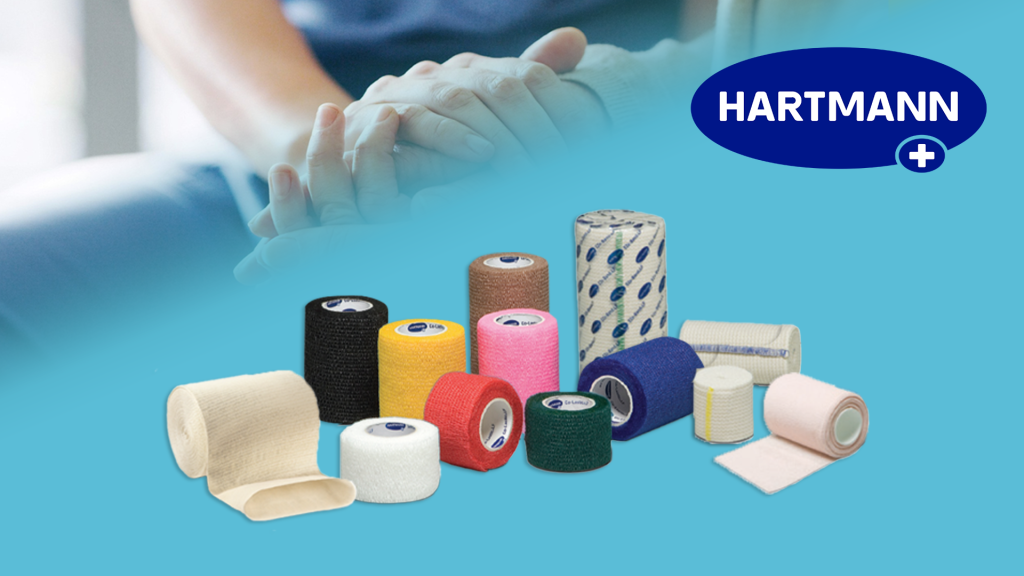
Explore how different Hartmann supplies can meet your wound care needs
Over 200 million packages of bandages are sold in an average year in the United States, and sales are only increasing.
Innovators in the industry have increasingly developed new varieties of elastic bandages, roll gauze, and cohesive dressings to meet specific needs.
For example, in an average year, roughly 10.1 million people are affected by chronic wounds, 7-9 million receive stitches in the ER for lacerations, and about 2 million people experience ankle sprains.
Those are all very different situations, and they require different types of bandages for optimal healing. For over a century, Hartmann has invested time and resources into wound research to develop unique, top-of-the-line solutions.
This guide explores distinct Hartmann bandages, cohesives, and gauze products, their benefits and drawbacks, and when to use each type while caring for wounds.
Hartmann Helps Wounds Heal
Hartmann offers complete wound management solutions in three discrete categories.
The solutions under the Hartmann Traditional Wound Management umbrella address typical, acute wounds. These include acute cuts, lacerations, and burns. The traditional wound care products can even be used with wounds with high degrees of severity, under the care of a medical professional.
The solutions within the Hartmann Advanced Wound Care category are designed to treat complex wounds. Complex wounds can include:
- Swollen wounds
- Wounds with significant exudate
- Chronic wounds (like diabetic ulcers)
- Wounds in unusual or hard-to-reach locations
- Wounds affecting patients with underlying conditions that make healing challenging
The solutions comprising the Hartmann Incontinence Care line are specifically created to address the particular challenges involved in treating wounds and skin injuries related to incontinence.
This guide explores gauze rolls, elastic bandages, and cohesive wraps from all three Hartmann categories.
Wound Care 101: Support, Protection & Treatment
Wound dressings serve three functions: coverage, stabilization, and treatment. There are different approaches to each role, but each should be served for effective healing.
Coverage Shields Wounds & Creates An Optimal Healing Environment
Coverage literally covers the wound so it’s no longer exposed. It shields the wound from the environment around it with a physical barrier (usually a fabric material or gel barrier).
Choosing the right covering layers creates an optimal healing environment. For some wounds, that means ensuring the wound is moist and breathable, while still blocking out germs. For others, a waterproof cover is more useful.
Stabilization Reduces Swelling & Prevents Re-Injury
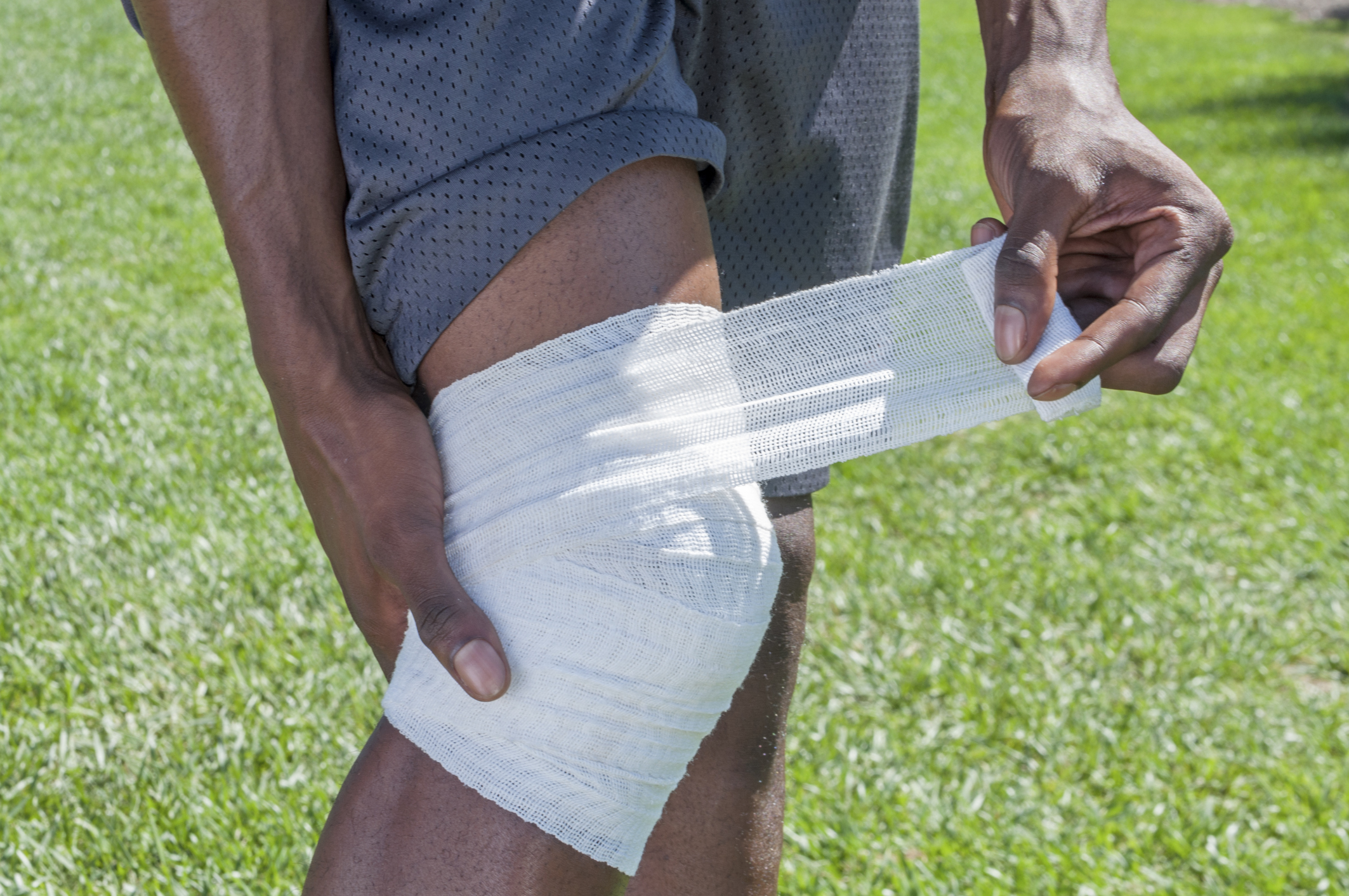
Stabilization holds the wound closed and steady. Stitches can stabilize a deep wound. Bandages wrapped around the wound can enhance stabilization from stitches, and they can stabilize shallower wounds independently.
Compression is a type of stabilization designed to reduce or prevent swelling. The best stabilization prevents accidental re-injury while allowing some range of movement.
Treatment Kills Infections & Soothes Irritation
Treatment kills infectious pathogens and soothes painful symptoms, like irritation or itching. Ideally, effective antimicrobial treatment will prevent wound infection, dryness, irritant reactions, and inflammation.
Treatment can be applied before bandaging or infused into a bandage.
Hartmann Offers Total, Tailored Solutions For Wound & Injury Management
Hartmann products are tools to address different problems at different stages of wound care, or while caring for different types of wounds. This guide details three product types:
- Gauze rolls
- Cohesives & wraps
- Large & small elastic bandages
You are reading Part 1: Gauze. Click the link to learn about the other Hartmann bandage products.
- Part 2: Cohesives, Wraps & Elastic Bandages
[links forthcoming]
Gauze Roll Items To Dress Serious Wounds
Gauze is a fabric medical dressing, typically made of cotton, synthetic fibers, or a blend. Woven gauze holds fibers together with a plain weave, while non-woven gauze fuses fibers together with advanced technology.
Gauze products are designed to dress or pack more severe wounds and stabilize wounds. Certain antimicrobial variants can offer direct coverage, and they can help treat recurrent, incontinence-related wounds.
Note: Packing Wounds With Gauze
Severe wounds may require packing as part of dressing. This is done with sterile gauze sponges or pads.
However, packing is an advanced wound care technique. Read Bleeding Control, a professional guide to emergency wound care, to learn more.
Do not attempt to pack a wound without training. Nor without clear, ANSI-standard guidance.
Defer to clinician instructions when it comes to dressing changes for severe wounds.
Incontinence-Related & Primary Wound Dressing Gauze Roll Products
Only sterile, non-adherent gauze is appropriate to apply directly to the wound as a primary layer. All Hartmann Gauze products explored below are non-adherent. They’re also designed to prevent fibers or irritants from agitating the wound, which is a risk posed by certain other gauzes.
Gauze is one of the least expensive dressings.
However, it’s important to choose gauze that’s absorbent enough for the wound you’re treating; otherwise, you’ll have to change dressings too frequently. Non-woven gauze is more absorbent than woven gauze.
DermaTex Ag Fabric Gauze by Hartmann
Rolls like DermaTex Ag Moisture Wicking Fabric with Antimicrobial Silver are effective for wounds at risk of maceration, or wounds prone to leaking, as the fabric is designed and woven to wick away moisture.
Its polyester fibers help with skinfold management by reducing friction. The gauze is pretreated with antimicrobial silver, which can help prevent infections.
Hartmann includes DermaTex gauze in its Incontinence Care line.
Hartmann Sterilux AMD
The Sterilux AMD Premium Bulky Bandage is a highly absorbent gauze roll. It’s also treated with AMD, a powerful antimicrobial solution combining 0.1% PHMB and 0.02% benzalkonium chloride.
Sterilux AMD gauze bandages are designed for use as “Primary dressing for absorption of wound exudate or secondary bandage for extra cushioning and padding.”
However, it shouldn’t be used to dress third-degree burns, nor on “patients with known sensitivity to PHMB and BKC.”
Hartmann includes Sterilux gauze in its Traditional Wound Care line.
Hartmann Sorbalux Non-Adherent Gauze
Hartmann’s Sorbalux Non-Adherent Dressing is a multi-layer dressing.
The central layer is a polyester-rayon blend fabric gauze. That layer is “bonded on both sides by a smooth, perforated polyester film outer surface.” This film makes the gauze completely non-adherent.
Thus, it’s safe to apply directly to a wound bed. It’s categorized as a wound contact layer.
The Sorbalux dressing’s design is still breathable and fairly absorbent. It can be used to treat wounds with moderate exudate.
How To Use Gauze As a Primary Dressing Layer
Use instructions are available with each gauze product.
For example, “Using DermaTex Ag Moisture Wicking Fabric,” is an illustrated, six-step application guide. It’s available on the DermaTex gauze product page (linked in the title).
Roll Gauze For Secondary Wound Dressing Layers
Hartmann offers more than a few gauze roll bandage options. Two are particularly useful as secondary and outer layers for wound dressings.
Sterilux Bulky Sterile Gauze, by Hartmann
The Sterilux Bulky Premium Roll Gauze, Sterile is a six-ply cotton gauze. The fabric is 100% cotton, without latex or irritants like optical brighteners.
It’s highly absorbent, making it effective for high-exudate wounds. The absorption helps create an appropriate wound environment while offering additional protection from infection. Sterilux’s cotton layers also create a comforting cushion for the wound, helping it resist injury.
Hartmann’s Conco Conforming Gauze Bandage
In contrast, the Conco Conforming Stretch Bandage, Sterile is a uniform weave, polyester fabric gauze. It’s not ideal for heavy-exudate wounds.
Instead, as a conforming gauze, it’s useful when bandaging difficult-to-dress body contours. The fabric adapts, conforming to the shape of any body part it’s applied to. Conco bandages cling to themselves, and they can provide light compression.
How To Use Roll Gauze As a Secondary Wound Dressing Layer
To apply gauze as a secondary wound dressing layer, engage standard first aid practices.
Follow the steps in the “Checklist For Simple Dressing Change” section of Nursing Skills, Wound Care. You can also watch each step demonstrated in the Open RN video embedded in the section.
Conforming Gauze Bandages For Dressing Retention
Dressing retention gauze is applied to the outermost layer of wound dressing. It should not touch the wound. It should not be used as a secondary layer for a high-exudate wound.
Cornforming gauze is ideal for securing and retaining dressings on joints and frequently used muscles.
Peha-Haft Cohesive Conforming Gauze
Hartmann’s Peha-haft Cohesive Conforming Gauze is a fabric blending of 34% viscose, 34% cotton, and 32% polyamide. It’s incredibly light, soft, breathable, and hypoallergenic, making it a useful choice for fragile or sensitive wound care.
Like all conforming bandages, its elastic construction lets it adapt and conform to the shape of the body part it’s applied to. This helps it secure dressings on joints or hard-to-reach areas.
Flexicon Conforming Self-Cling Conforming Gauze
The Flexicon Conforming Stretch Bandage (Sterile Gauze Roll) by Hartmann is a conforming roll gauze composed of uniform polyester yarn fabric. It utilizes a unique filament structure to conform to new shapes with precision, while still allowing the patient significant movement and flexibility.
The structure also lets the Flexicon gauze cling tightly to itself, without adhesive that might stick to something else.
How To Apply Conforming Cohesive Gauze Bandages
To apply conforming gauze as an outer layer for dressing retention, follow the instructions specific to the product you’re using. Instructions are usually available inside the product’s package and on the manufacturer’s website.
For example, you can find Peha-haft Cohesive Conforming Bandage (PDF), which details step-by-step use instructions, on Hartmann’s site.
____
Why Do So Many Medical Professionals Trust Hartmann?
Hartmann has honed its wound care expertise for over 150 years. In 1873, Paul Hartmann and Professor Victor von Bruns developed a more absorbent cotton dressing. Hartmann has been innovating ever since.
Yet, throughout every phase of innovation, the Hartmann company never loses sight of its goal: “enhance the quality of life of those that use our personal healthcare products and services.”
To do this, they “continuously consult consumers and use their insights to develop ideas and products specifically targeted to their needs.” They also run comprehensive trials, ensuring a product not only works, but works better than the current standard product, before releasing it to market.
Making Sure Every Product Works
For instance, a study of the AMD used in Hartmann’s Sterilux AMD bandage compared its effectiveness in treating patients with skin grafts and burns against alternate antimicrobial dressings: “patients treated with this AMD exhibited shorter re-epithelialization times and lower pain levels than the patients treated with [current standard brand].”
These high standards for evidence are paired with equally high standards for user satisfaction:
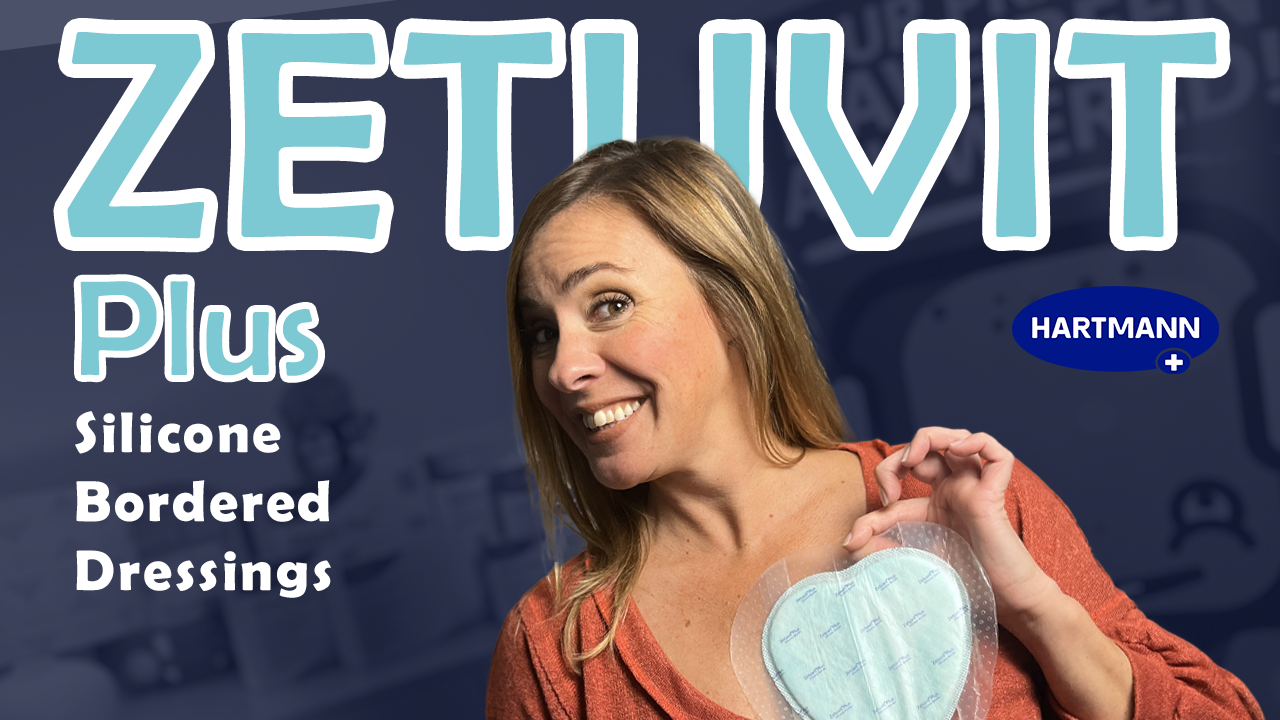
“In an open, multicenter investigation, we wanted to find out how these dressings benefit both patients and healthcare professionals. The results were telling: in 100 percent of cases, Zetuvit® Plus achieved the primary objective, offering effective exudate management. It also resulted in a significant decrease in patients with maceration (65 percent) and led to an overall reduction in wound size.
No wonder that 96 percent of patients rated their satisfaction and comfort as ‘excellent’ or ‘good’.”
Hartmann products have also proven their reliability time and again in the real world. Here are just a few of the things people have to say about Hartmann gauzes.
Users Say, “Great Quality,” “The Easiest And Best”
“It’s the easiest and best material to hold wound pad in place and still provide some air to flow through the wrap. It surpasses any other product on the market. I have a husband on blood thinners, I am frequently treating him for significant injuries. Peha-haft makes treatment so much easier.”—Linda Grimmett, reviewing Peha-haft Cohesive Conforming Gauze
“They are all I was hoping for and then some! I will buy again if and when the need arises.”—Annette Aben, reviewing Sterilux
This is a great quality medical-grade gauze. I use it for my wife’s wound care treatments”—Joe Hillbrand, reviewing Sterilux AMD
Shop Medical Monks’ Full Suite of Hartmann Wound Care Supplies Today
For high-quality roll gauze and related bandage products, shop Medical Monks’ online Hartmann Store today. To learn more about Hartmann’s bandages and dressing, read on.
- Hartmann Dressings Guide Part 2: Cohesives & Elastic Bandages
[links forthcoming]

The MEDICAL MONKS STAFF brings to the table decades of combined knowledge and experience in the medical products industry.
Edited for content by JORDAN GAYSO.